
What Should You Do if Your Hearing Aid Gets Wet
Anyone who has lived through a few Fargo summers knows the sky here

By: Dr. Matthew Frisk | September 24, 2025
Most children have little experience with hearing tests beyond the brief screenings they might receive at school or during routine checkups. If your child needs a comprehensive hearing evaluation, they probably have no idea what to expect from the appointment. Maybe you’ve noticed they don’t respond when you call their name from another room, or their teacher mentioned they seem to miss instructions in class. Whatever brought you to schedule this appointment, your child might feel nervous about going somewhere new and having tests they don’t understand. It’s completely normal for kids to feel anxious about medical appointments, especially when they involve unfamiliar equipment and procedures.
The good news is that hearing tests are designed to be comfortable and even interesting for children. Most kids find the experience much easier than they imagined once they understand what’s going to happen. When you take time to prepare your child for what they’ll experience, you’re helping them feel more confident and cooperative during the appointment.
A little preparation can turn what might seem scary into something manageable and even educational. Your child’s comfort during the test helps ensure accurate results, which means you’ll get the information you need to help them hear their best at school, at home and during all their favorite activities.
Early hearing tests are critical for identifying potential hearing differences that could affect a child’s development. Even mild hearing loss can make it harder for a child to pick up speech sounds, follow instructions and engage with peers. Testing shortly after birth or during early childhood helps ensure that any hearing issues are detected before they impact language acquisition and learning.
These tests also allow families and professionals to monitor changes over time. Children’s hearing can shift as they grow, so regular evaluations help track progress and adjust support when needed. Early detection and ongoing monitoring give children the best chance to develop strong communication skills and reduce the risk of learning delays.
When hearing differences are caught early, interventions can be tailored to each child’s specific needs. Whether it’s hearing devices, therapy or educational accommodations, knowing the exact nature of a child’s hearing helps guide the most effective support. Early testing sets the stage for proactive care rather than reactive problem-solving, giving children a smoother path through both school and social development.
It can sometimes be difficult to tell if a child is experiencing hearing differences, especially if the changes are subtle. One of the first signs to watch for is delayed speech or language development. If a child isn’t meeting typical milestones for babbling, forming words or following simple instructions, it may indicate a hearing concern that should be evaluated.
Other signs can include frequent requests for repetition, turning one ear toward a sound or responding inconsistently to voices and noises. Some children may appear unusually quiet or withdrawn in social settings, while others might show frustration when they can’t understand what’s being said. These behaviors can be important clues that hearing is affecting their ability to communicate effectively.
Environmental reactions can also offer insight. Children who seem to struggle in noisy environments like classrooms, playgrounds or family gatherings may be having difficulty filtering sounds. Regular observation of how your child responds to different settings can help you recognize patterns that warrant a professional hearing assessment.
Talking to your child about a hearing test in a way they can understand can make the experience less intimidating. Start by using simple, clear language. You might say something like, “We’re going to check how well your ears hear sounds, just like a game where you listen carefully.” Framing it as a fun activity or a “listening adventure” helps reduce anxiety and encourages cooperation.
It also helps to walk your child through what will happen during the test. Explain that they may hear beeps, clicks, or voices through special headphones and that the professional will ask them to respond by raising a hand or pressing a button. Let them know that the test doesn’t hurt and usually only takes a short time. Giving your child the chance to ask questions and reassuring them that you’ll be there the whole time can make the process feel safe and familiar, setting the stage for a smooth and successful hearing evaluation.
Preparing your child before a hearing test can help them feel calm and confident. Take some time to explain what will happen in simple terms, focusing on the idea that the test is a way to see how well their ears hear sounds. You can describe it as a short, fun activity where they listen for beeps, tones or voices and respond in small ways like raising a hand or pressing a button. Avoid using words that might sound scary, like “check” or “doctor,” and instead focus on the idea of discovering how their ears work.
It also helps to normalize the experience by letting your child know that many kids have hearing tests and that it’s completely okay to feel a little nervous. Encourage questions and listen to their concerns, giving honest but reassuring answers. Showing enthusiasm and curiosity yourself can make the experience feel less clinical and more like a shared learning activity. This approach helps your child enter the hearing test with a sense of control and understanding, which can make the process smoother for both of you.
Children often look to adults for cues on how to react. Staying calm and reassuring can help your child feel more at ease. Bringing a favorite toy or book can provide comfort while waiting for the appointment.
You can also practice listening games at home, like having your child close their eyes and guess different sounds. This helps them understand what will happen during the test and makes the process feel more familiar. Remind your child that you will be with them throughout the visit.
Encourage your child to ask questions about the hearing test, and answer honestly in simple terms. When children feel prepared and supported, they are more likely to have a positive experience.
If your child has special needs or specific concerns, let the professional know before your visit. Share information about sensory sensitivities, communication preferences or past experiences with medical visits when you schedule the appointment. This allows us to make any needed adjustments so your child feels as comfortable as possible during their hearing test.
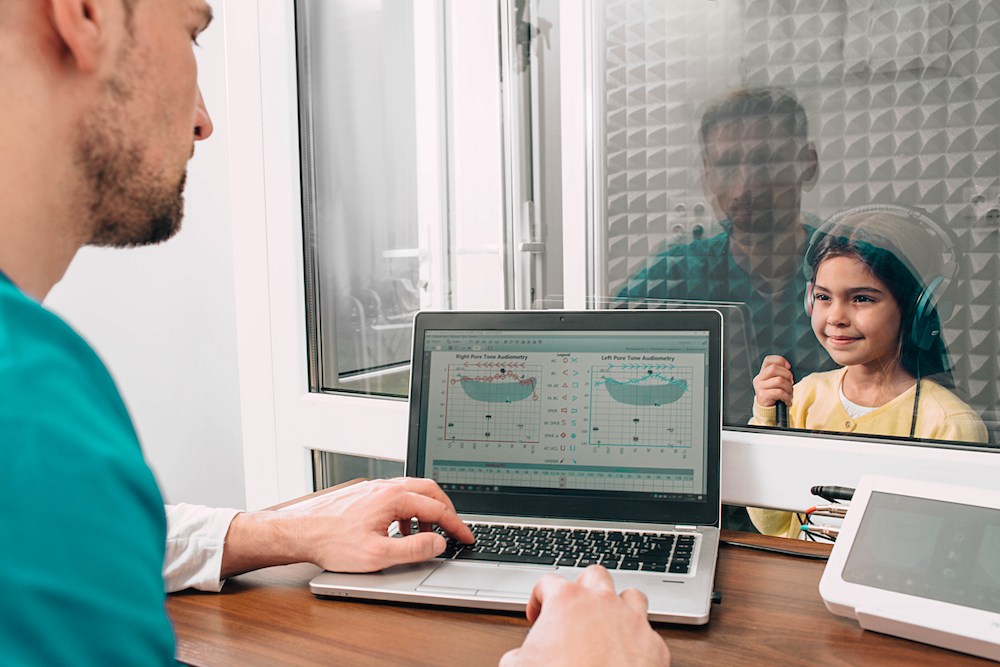
During a child’s hearing test, the professional uses equipment designed for young patients. Headphones or soft ear inserts are often used so your child can listen to different sounds or words. If your child is too young for headphones, speakers in the room may be used instead.
Some tests use a small device placed in the ear canal to measure how the ear responds to sound. Another tool may check how well parts of the middle ear are working by gently changing air pressure in the ear. These tools help us get a clear picture of your child’s hearing health without causing pain or discomfort.
A child’s hearing evaluation can involve several types of tests, depending on their age and developmental level. For younger children, specialists often use play-based or behavioral hearing tests that turn listening into a game. The child might be asked to look at, point to or interact with a toy each time they hear a sound. These tests help the professional understand how well the child hears different tones and volumes without causing stress or confusion.
Older children may undergo more structured tests that measure how their ears respond to a range of sounds. This can include pure-tone testing, where the child indicates when they hear specific tones, and speech recognition tests, which check how clearly they can hear and understand spoken words. In some cases, specialists may also examine how the middle ear is functioning and check for any fluid or pressure issues. Each test is designed to give a clear picture of your child’s hearing health so that any needed support can be identified early.
Listening games at home can help your child feel more comfortable before their hearing test. Try activities like:
What to Bring for Comfort on the Day of the Appointment
Bringing familiar items from home can help your child feel more at ease during their appointment. A favorite stuffed animal, blanket or small toy can provide comfort while waiting or during the hearing test.
Pack a snack and a drink in case your child gets hungry or thirsty, especially if the appointment is close to mealtime. Comfortable clothing and an extra layer, like a sweater, can also help your child stay relaxed in the clinic’s environment.
After your child’s hearing test, you may feel a mix of emotions as you wait for the results. Being prepared helps you process information and support your child in the best way possible.
Take notes during your conversation with the specialist and ask questions if anything is unclear. Write down any recommendations, like follow-up visits or steps to support your child’s hearing at home or school. Staying organized and informed will help you make confident decisions about your child’s care.
A little preparation goes a long way in helping your child feel ready for their first hearing test. Honest conversations, fun listening games at home and familiar comforts can make the experience smoother for both of you. Supporting your child before, during and after the visit helps set a positive tone for future care.
If you have questions or would like more tips on preparing your for a hearing test, our team at Hearing Solutions, Inc. is available to help. Contact our Fargo, ND location at (701) 929-6692 to speak with us or schedule an appointment. We are here to guide you through each step so your family feels comfortable and informed throughout the process.

Anyone who has lived through a few Fargo summers knows the sky here
By: Dr. Matthew Frisk | August 24, 2026
For a lot of people, the hesitation around hearing aids has less to do
By: Dr. Matthew Frisk | May 18, 2026
There’s a running list of explanations most people keep without
By: Dr. Matthew Frisk | March 25, 2026